The cloud path every career in tech eventually crosses.
Cloud infrastructure is the broadest Microsoft career. Every company running Azure needs people who can design, deploy, and operate it. Here is the path I would walk today, written for the person who wants to build the foundations everything else runs on.

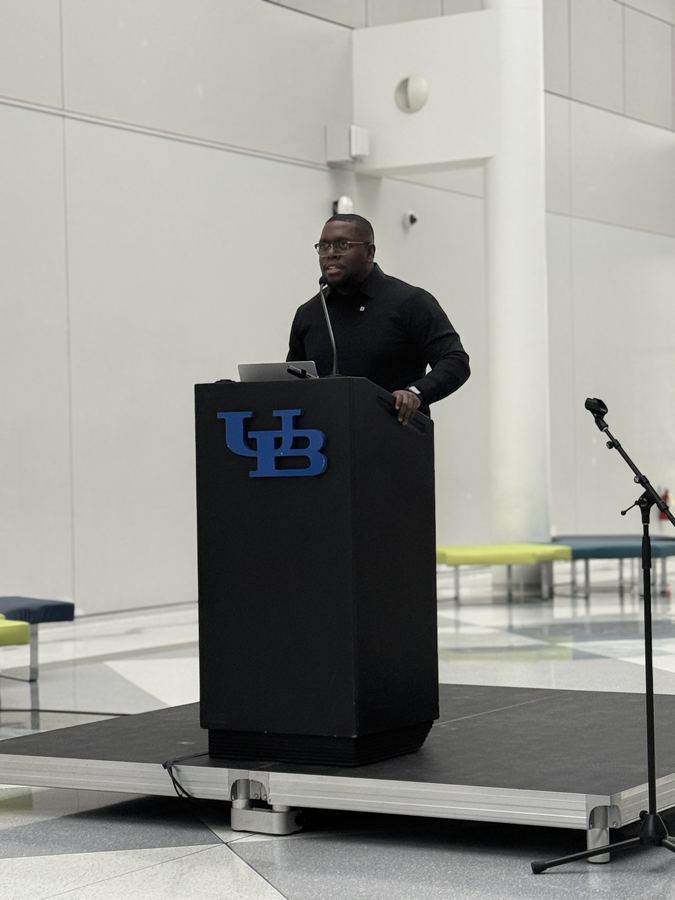
My path. In order. The real one.
Before I tell you which certs to take, you should know how I got here. Cloud infrastructure is the area where my career started, where it deepened, and where it still anchors most of my current work.
Most articles about cloud careers start with a framework. Mine starts with a kid taking apart old computers at age eight. By the time virtualization and cloud showed up as career paths, I had already spent years living inside the physical layer underneath them. That is the unfair advantage of starting young. The fundamentals never feel foreign.
Here is the actual timeline.
-
Age 8 · BrooklynThe first computerTook apart every old machine I could find. Learned what every piece did. Compute, storage, network. Before any of those words meant anything, I was already touching them.
-
2011 · University at BuffaloBusiness Administration with MIS & MarketingPicked the business + IT + marketing intersection. The MIS concentration is what locked in my technical fundamentals. Most cloud architects I know took a similar path: business school with a technical concentration, not pure CS.
-
2012-2013 · Ingram MicroPre-Sales Engineer (Microsoft ROK / Server Lead)This is where the cloud career actually started. Led 40+ engineers across Buffalo and Manila building Microsoft Server solutions. Hyper-V, Server 2008, SCE, SCVMM, Small Business Server. Hands deep in Data Core, Veeam, and Cisco Data Center products. I was not deploying to Azure yet. Azure was barely a thing. But the muscle memory I built here transferred completely when cloud became the default.
-
2013-2015 · Ingram MicroTechnical Account Manager (VMware)2.5 years presenting VMware Identity Access Management at tradeshows and partner expos. Managed $50-55M in annual VMware revenue across the US territory. Virtualization made me think about workloads as portable, not pinned to hardware. That mental model is the foundation of cloud architecture.
-
2015-2021 · Ingram Micro & RSASecurity Pre-Sales / Product Marketing / Microsoft Security Consultant6 years working across security and Microsoft. I was not a pure cloud engineer in this stretch, but everything I did intersected with cloud architecture. Identity, networking, packet capture, hybrid deployments. The cloud-adjacent work that made the eventual transition feel natural.
-
2021-2025 · MicrosoftSenior Partner Technology Strategist (GPS)4+ years leading cloud and security strategy with Microsoft partners. This is where I started thinking about Azure architecture at portfolio scale. Not one workload at a time, but how partners built repeatable practices across hundreds of customers.
-
2025-Today · MicrosoftGlobal Senior Cross Solution Partner Solution ArchitectI now orchestrate cross-solution Azure modernization initiatives for global partners. Identity, endpoint, SIEM, MXDR, Copilot. The work is about turning Azure capabilities into repeatable business value. Every decision touches the fundamentals I learned over a decade ago.
Cloud engineering is a lot of "the VM will not start at 2am." Be honest with yourself about whether that sounds like the worst day of your life or the best puzzle you have seen all week.
What my path taught me about cloud: the fundamentals do not change. They just get renamed. Hyper-V became Azure VM. SCVMM became Azure Resource Manager. The data center became the region. If you build strong infrastructure thinking early, you can ride every paradigm shift Microsoft throws at you.
That is what AZ-900, AZ-104, and AZ-305 are designed to give you: the modern fluency, with the timeless thinking underneath.
Who this is actually for.
I would rather tell you to close this tab than waste your time. So let me be direct about who should keep reading, and who should not.
This path is for you if:
- You are in IT in some form (help desk, sysadmin, network) and want to move up.
- You are a developer who wants to understand the infrastructure your code runs on.
- You lead infrastructure and need to architect Azure properly, not just adopt it.
- You are switching from AWS or GCP and need a Microsoft-recognized credential.
This path is not for you if:
- You hate infrastructure. Cloud engineering is a lot of "the VM will not start" at 2am. Be honest with yourself.
- You want to specialize in AI, data, or security from day one. Those have their own paths.
- You want to skip AZ-900. Do not skip AZ-900. I do not care how experienced you think you are.
Still here? Good. Let me tell you what usually goes wrong.
The biggest mistakes I see every time.
I have mentored enough people through this path to see the same mistakes on repeat. Each one adds months. One of them can cost you a year.
Skipping AZ-900 because "I have worked in cloud before"
Every AWS or GCP person thinks they know enough to skip AZ-900. Every one. Then they hit AZ-104 and discover that Azure organizes things differently than what they are used to. Resource groups, management groups, Entra tenants. The conceptual mapping is not obvious.
Memorizing AZ-104 instead of building it
AZ-104 has a brutal amount of command-line work. PowerShell, Azure CLI, ARM templates, Bicep. You cannot memorize your way through. People who try fail the lab-style questions. People who build pass on the first attempt.
Rushing AZ-305 without operational experience
AZ-305 is an architect cert. It tests whether you can design systems, not whether you can configure them. I have seen people pass AZ-305 on study guides alone and then fail the first real architecture interview because they cannot defend their design choices under pressure.
The sequence, in order, with timing.
Three certs. Six to ten months of focused work. The shortest path to Microsoft cloud career credibility.
The most-taken Microsoft cert for a reason. AZ-900 covers cloud concepts, Azure services, governance, cost management, and the shared responsibility model. Fundamentals cert, does not expire. If you work anywhere near Azure, this is the price of admission.
Microsoft Learn →The career-changer. AZ-104 covers identity, governance, storage, compute, networking, and monitoring for Azure. This is the cert that moves people from help desk into Cloud Engineer roles paying $85K-$130K. I have seen people go from support tickets to infrastructure design in twelve months on the strength of this one credential plus hands-on work.
Microsoft Learn →The design cert. AZ-305 covers architecting identity and access, data platform, business continuity, and infrastructure solutions on Azure. This is the expert-level cert that signals to employers you can design at enterprise scale. Prerequisites: AZ-104 (or equivalent experience). Roles: $140K-$200K+.
Microsoft Learn →Total: 24-34 weeks of focused study. $429 USD in exam fees. A credential stack that tells employers you can build, not just talk about.
What to do between certs.
Here is what separates the people who get certified and also get hired, from the people who get certified and stay stuck: what they do between exams.
The cert is proof you studied. The project is proof you can build. Employers want both. Here is what I recommend doing in the weeks between each exam:
After AZ-900:
- Open the Azure free tier. Create a resource group. Deploy a VM. Destroy it. Do it again.
- Read three Azure architecture reference cases on learn.microsoft.com. Different industries. Pattern recognition is how architects are built.
- Post about what you learned on LinkedIn. One paragraph. You are accumulating public proof.
After AZ-104:
- Build a three-tier application in Azure. Web app, API, database. Use Bicep or Terraform, not just the portal. Break it, fix it, document it on GitHub.
- Start applying for Cloud Engineer roles. You have the credential, the lab work, the language. You do not need to feel ready. Get in the interview cycle.
- Follow three Azure MVPs. See what they argue about. Form opinions.
After AZ-305:
- Design a real architecture and publish it. Take a sample business requirement. Produce a full architecture diagram, cost model, risk assessment. Publish it on GitHub or LinkedIn.
- Start targeting Senior Cloud Engineer or Solutions Architect roles. $140K-$200K is in range. Get in the room.
If you can only do one thing between certs: build one tiny project. Not a perfect one. A small, shippable, shareable one. Momentum beats perfection every time.
Thriving, not just surviving.
Most cert guides end at "you passed, congrats, apply for jobs." That is like teaching someone to drive and then dropping them on the highway. Let me tell you what actually happens after you are certified, and how to not just survive it but use it.
Infrastructure as code is table stakes
Bicep, Terraform, ARM. Pick one, master one, know the others. No production infrastructure gets deployed through the portal anymore.
Cost is an architecture concern
The best architects design for cost from day one. Learn Azure pricing like you learn Azure services. Your opinions will carry weight.
Multi-cloud literacy pays
You do not need to be an AWS expert, but know enough to have the conversation. Multi-cloud architects earn a premium.
Landing zones are the enterprise pattern
Azure Landing Zones is how real enterprises deploy. Study CAF, Azure Policy, management groups. This is where architects get hired.
Security and cost eat architect time
Two topics that used to be separate teams now sit on the architect. Learn enough security and FinOps to lead conversations, not just participate.
After AZ-305, specialize by workload
SAP on Azure. AVS. HPC. Mission-critical. Pick a workload pattern and become the person companies call for it.
AZ-104 is where careers change. Not AZ-305. AZ-104. Because AZ-104 is the cert that moves you from operator to engineer.
The 2026 retirement watch.
Microsoft is retiring 11 certifications in 2026. Here is what matters for this specific path:
AZ-900, AZ-104, AZ-305 are all current
As of April 2026, every cert in this path is current with no announced retirement. The core cloud infrastructure path is the most stable of all four journeys on this site.
AZ-800 and AZ-801 are consolidating
If you plan to add Windows Server Hybrid Administrator on top, note that AZ-800 and AZ-801 are being replaced by a single AZ-802 exam later in 2026. One exam instead of two. Good news if you were planning to take both.
Watch the AB-series
Microsoft is launching AI-focused business architecture certifications (AB-100, AB-620, AB-250, AB-410). These are not infrastructure certs, but they signal where the architect role is going. Keep an eye on the AB-100 Agentic AI Business Solutions Architect Expert if you want to layer AI on top of your cloud foundation.
Bookmark this page. As Microsoft announces more changes through 2026 and into 2027, I will update this section. Or see Microsoft’s official retirement list:
Walked the path? Come find me.
I am not currently taking new 1-on-1 mentees, but if you have done the work, built the projects, and have real questions, I read every message. And if you are the right fit for what I am building next, we will talk.