The Microsoft Security path I trust with real networks.
Most cybersecurity guides start with the framework. Mine starts with the reality: every Microsoft shop needs defenders, and not enough people know where to begin. Here is the path, in order, from a Microsoft Global Cross Solution Architect who has sat on both sides of the incident room.
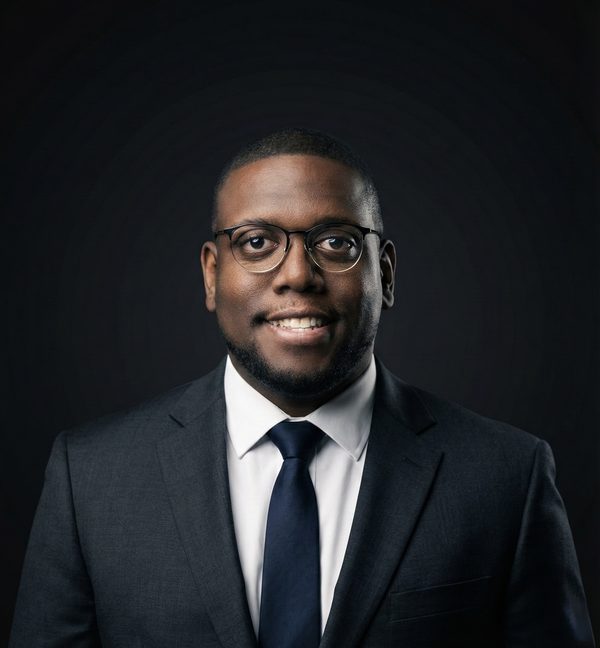
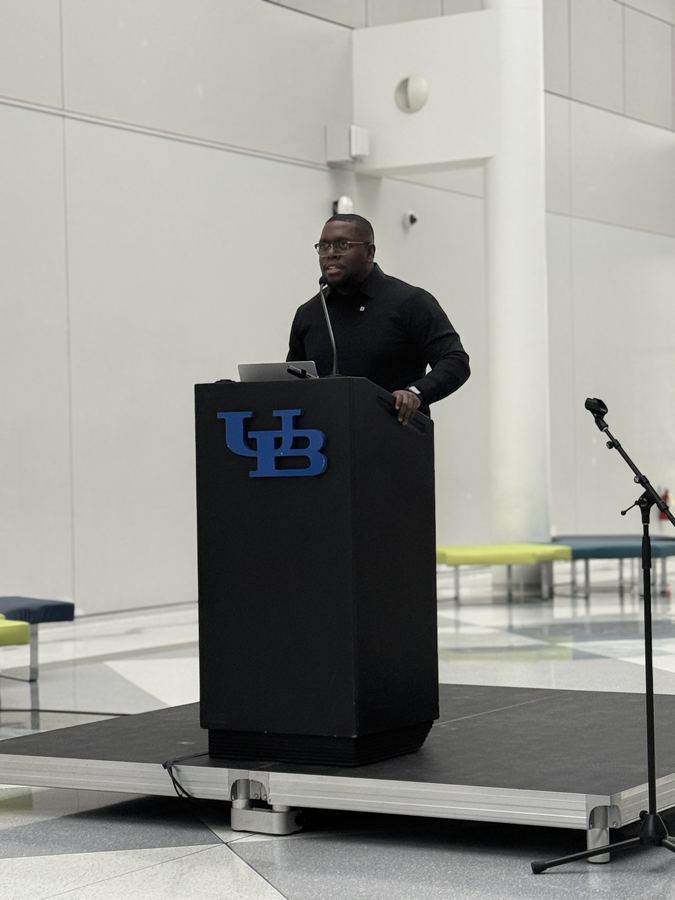
My path. In order. The real one.
Before I tell you which certs to take, you should know how I got here. Because security is the area I have lived in longest, and the path I would recommend today is built on a decade of partner-facing security work.
I am not asking you to trust the path because I read about it. I am asking you to trust it because I walked it. From RSA SecurID Access and NetWitness in the field, to Microsoft Security Consultant work at Ingram Micro, to today as a Microsoft Global Senior Cross Solution Partner Solution Architect driving AI- and security-led sales outcomes worldwide.
Here is the timeline.
-
2012-2013 · Ingram MicroPre-Sales Engineer (Microsoft ROK / Server Lead)My first real technical role. Led 40+ engineers across Buffalo and Manila on Microsoft Server, Hyper-V, SCVMM, Data Core, Veeam, and Cisco Data Center. Security was not a separate practice yet. It was just how you built systems that did not fall over. That foundation made every security cert easier later.
-
2013-2015 · Ingram MicroTechnical Account Manager (VMware Identity & Access)2.5 years presenting VMware Identity Access Management at tradeshows, partner expos, and onsite. Managed 300 accounts and supported 62 sales reps. $50-55M annual VMware revenue. This is where identity stopped being theoretical and became something I could explain in a customer boardroom.
-
2015-2018 · Ingram MicroSecurity Pre-Sales Technology Consultant II (RSA)3 years of pure security presales for RSA reseller partners across the US. Architected next-generation Multifactor, SIEM, and network packet capture solutions. Demonstrated RSA SecurID Access and NetWitness Suite (logs, packets, endpoint) to customers and resellers. This is where I learned that great security architecture is the difference between a breach and a save.
-
2018-2019 · RSA SecuritySenior Technical Product Marketing Manager (SecurID Access)Owned competitive battle cards that helped sales win opportunities. Created and hosted the internal RSA SecurID Access Monthly Podcast to enable field sales teams. I learned that the best security pros do not just defend systems. They translate capabilities into language buyers understand.
-
2019-2021 · Ingram MicroMicrosoft Security Technology Consultant IIGuided partners through the Microsoft Security practice program. Delivered security workshops and bootcamps aligned to customer risk and compliance needs. This is where I made the formal pivot to the Microsoft Security stack. Defender, Sentinel, Entra. The transition from RSA to Microsoft was not a reset. It was a translation.
-
2021-2025 · MicrosoftSenior Partner Technology Strategist (GPS)4+ years leading security and cloud strategy with Microsoft partners across territory. Coached partner teams on security positioning, deal progression, and customer commitment. AI-enabled security scenarios came late in this role and reshaped everything.
-
2025-Today · MicrosoftGlobal Senior Cross Solution Partner Solution ArchitectI now lead cross-solution security and AI initiatives across Identity, Endpoint, SIEM, MXDR, and Copilot scenarios. The work is about repeatable security and AI offers that partners can scale. Every conversation I have had since 2012 prepared me for this room.
Every breach I have seen traces back to identity at some point. If you only learn one thing deeply, make it identity.
What this path taught me: security careers compound. The skills I built on RSA SecurID Access in 2015 still apply when I architect Microsoft Entra deployments today. The KQL I write in Sentinel rhymes with the SQL I wrote on NetWitness logs. Nothing is wasted.
That is why I trust this path: SC-900, AZ-900, SC-200, SC-300, SC-100. It is the same arc I walked, just compressed into a sequence you can finish in 12 to 15 months.
Who this is actually for.
I would rather tell you to close this tab than waste your time. So let me be direct about who should keep reading, and who should not.
This path is for you if:
- You are curious about security but the technical depth feels intimidating.
- You are in IT already (help desk, sysadmin, network) and want to specialize in defense.
- You are a developer who keeps hearing security complaints and wants to stop getting blocked.
- You lead a team and need to understand the Microsoft security stack well enough to hire for it.
This path is not for you if:
- You want to be a penetration tester or red-team offensive specialist. That is a different path, often OSCP and CEH.
- You are looking for a non-technical path into cyber. SC-900 is technical enough that you need to be comfortable with Azure concepts.
- You hate reading logs. SOC work is a lot of log reading. Be honest with yourself.
Still here? Good. Let me tell you what usually goes wrong.
The biggest mistakes I see every time.
I have mentored enough people through this path to see the same mistakes on repeat. Each one adds months. One of them can cost you a year.
Jumping to SC-200 before SC-900 and AZ-900
SC-200 is a meaty cert. It assumes you know how Microsoft organizes its security stack and how Azure resources work. Skip the fundamentals and you will spend the first four weeks of SC-200 studying things you should already know. It is the single biggest reason people fail SC-200.
Treating SC-300 like a cert and not a mindset
Identity is the perimeter. If you treat SC-300 like just another cert to pass, you miss the whole point. Every breach story in the last five years has an identity component. Study SC-300 like you are going to be the last line of defense, because in most companies, the identity team is.
Chasing SC-100 without practical experience
SC-100 is an architect cert. It assumes you have designed and defended real systems. I have seen people pass SC-100 on memorization alone, then fail the first real architecture interview because they cannot defend their choices. The cert is the proof. The experience is the preparation.
The sequence, in order, with timing.
Five certs. Twelve to fifteen months of focused work, depending on your pace. Here they are, in the exact order I would take them today.
This is the frame. You learn how Microsoft thinks about security across Azure, Microsoft 365, and Entra (formerly Azure AD). Identity, access, compliance, threat detection. If you skip this, every cert after it feels harder than it should be. SC-900 is a fundamentals cert, which means it does not expire.
Microsoft Learn →You cannot defend what you do not understand. Azure is where the workloads live. Get this cert and you stop being the person who says yes to every security request without knowing the impact. Another fundamentals cert, so no expiration.
Microsoft Learn →This is where careers change. SC-200 is the SOC analyst cert, covering Microsoft Sentinel, Microsoft Defender XDR, and threat hunting with KQL. This is the cert that gets you into Security Operations Center roles paying $90K to $130K in the US, and it is the one I tell every mentee to aim for if they want to defend in production.
Microsoft Learn →Identity is the perimeter. Every breach I have seen in a Microsoft environment traces back to identity misconfiguration at some point. SC-300 teaches you Entra ID (Azure AD) inside and out: conditional access, PIM, identity governance, external identities. This is the cert that makes you indispensable to any M365 shop.
Microsoft Learn →The capstone. SC-100 is the expert-level architect cert covering zero trust strategy, security posture management, hybrid and multi-cloud defense, and security governance. This is the cert that moves you from practitioner to architect, and it is required if you want to design security for enterprise customers. Prerequisites: one of SC-200, SC-300, AZ-500, or MS-500.
Microsoft Learn →Total: 31-45 weeks of focused study. $693 USD in exam fees. A credential stack that tells employers you can build, not just talk about.
What to do between certs.
Here is what separates the people who get certified and also get hired, from the people who get certified and stay stuck: what they do between exams.
The cert is proof you studied. The project is proof you can build. Employers want both. Here is what I recommend doing in the weeks between each exam:
After SC-900:
- Spin up a free Microsoft 365 developer tenant. Explore the Compliance portal. Click every button. Break nothing.
- Read one cybersecurity incident post-mortem per week. Pick something recent. See how the failure happened. Apply SC-900 concepts to what you read.
- Post one LinkedIn note about what you learned. One paragraph. You are building a public signal that you care about security.
After AZ-900:
- Deploy a virtual network, add a VM, configure NSG rules. Break the connection on purpose, then fix it. You now know Azure networking, not just the exam answers.
- Read 3 Azure security case studies on learn.microsoft.com. Pick industries you care about. See how the patterns repeat.
After SC-200:
- Set up Sentinel in your developer tenant. Ingest some log source, even if it is just Microsoft 365 audit logs. Write your first KQL query. Write ten more.
- Follow two or three Microsoft Security Community creators. See what real SOC analysts discuss. Start forming opinions.
After SC-300:
- Configure Conditional Access policies in your tenant. Break your own login on purpose. Recover from it. You just learned something no exam can teach you.
- Start applying for SOC analyst or identity engineer roles. You have enough credentials. Build in public, document what you deploy, and get in front of hiring managers.
If you can only do one thing between certs: build one tiny project. Not a perfect one. A small, shippable, shareable one. Momentum beats perfection every time.
Thriving, not just surviving.
Most cert guides end at "you passed, congrats, apply for jobs." That is like teaching someone to drive and then dropping them on the highway. Let me tell you what actually happens after you are certified, and how to not just survive it but use it.
Pick an industry, pick a depth
After SC-100, specialize. Healthcare security is not the same as financial services security. Vertical depth pays more than horizontal breadth.
KQL is a lifetime skill
Keep sharpening your Kusto query language. Sentinel, Defender XDR, Log Analytics, Azure Data Explorer. KQL follows you everywhere. Master it.
Read breach reports monthly
Microsoft Digital Defense Report, Verizon DBIR, Mandiant M-Trends. These are free and they are gold. Attackers telegraph their next moves in the last year of data.
Join a Microsoft Security community
Microsoft Security Tech Community, local BSides, Microsoft Security MVPs. Real community compounds.
Renew every cert, every year
Microsoft security associate and expert certs expire annually. Free renewal assessment on Microsoft Learn. Do not let your hard work lapse.
The next step is not another cert
After SC-100, the next move is usually a specialist role or a domain specialization. CCSP, CISSP, or just deep specialization in one Microsoft product like Sentinel or Defender for Cloud.
The cert is the proof. The experience is the preparation.
The 2026 retirement watch.
Microsoft is retiring 11 certifications in 2026. Here is what matters for this specific path:
AZ-500 retires August 31, 2026
Replaced by SC-500 (Cloud and AI Security Engineer Associate). This does not affect the core path above, but if you were planning to add AZ-500 on top of SC-200 or SC-300, take SC-500 instead. It is the modernized replacement with cloud and AI security coverage built in.
SC-200, SC-300, SC-100 are all current
As of April 2026, all three are in good standing with no announced retirement. This path is safe to start today.
Bookmark this page. As Microsoft announces more changes through 2026 and into 2027, I will update this section. Or see Microsoft’s official retirement list:
Walked the path? Come find me.
I am not currently taking new 1-on-1 mentees, but if you have done the work, built the projects, and have real questions, I read every message. And if you are the right fit for what I am building next, we will talk.